


26th August 2026
By Shubhii Verma
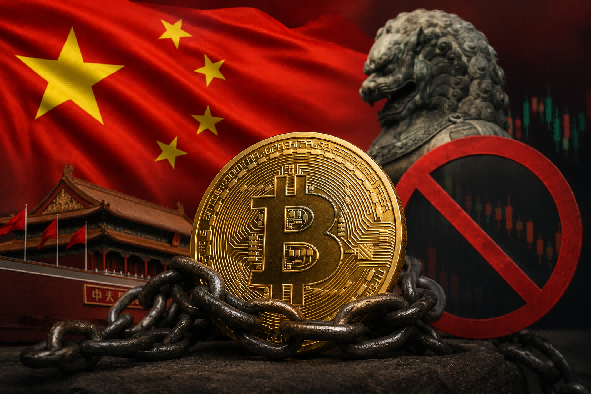
China’s relationship with Bitcoin is one of the most misunderstood stories in the global cryptocurrency market. The country has maintained a strict crackdown on cryptocurrency trading, mining and related financial activities, yet China is frequently listed among the world’s largest government Bitcoin holders.
So, does China own Bitcoin? How much Bitcoin does China own? And why would the Chinese government hold Bitcoin if crypto is banned?
The short answer is that China’s reported Bitcoin holdings largely come from cryptocurrency seized during criminal investigations, rather than from the government deliberately buying Bitcoin as a strategic reserve.
Is Crypto Banned in China?
China has maintained a restrictive approach toward cryptocurrencies for years. In February 2026, the People’s Bank of China and several other government agencies reiterated that virtual-currency-related business activities are illegal financial activities in mainland China. The authorities also reaffirmed restrictions on crypto trading and continued their crackdown on cryptocurrency mining.
The policy does not mean that Bitcoin disappears from China’s economy. Instead, it means that cryptocurrency exchanges, trading services and other crypto-related businesses cannot legally operate in the way they do in more permissive jurisdictions.
The government has also promoted the digital yuan, or e-CNY, as a state-backed form of digital money, which is fundamentally different from decentralized cryptocurrencies such as Bitcoin.
How Much Bitcoin Does China Own?
Various cryptocurrency-government tracking websites have historically listed China with around 190,000 BTC, making it one of the largest reported government Bitcoin holdings in the world. CoinGecko, for example, reported approximately 190,000 BTC for China in its government holdings analysis.
However, 190,000 BTC should not automatically be described as China’s current Bitcoin reserve.
The figure is largely connected to the massive PlusToken cryptocurrency fraud case. Chinese authorities seized approximately 194,775 BTC, along with large amounts of other cryptocurrencies, during the investigation. A Chinese court ruling stated that the confiscated assets would be handled according to law and transferred to the national treasury.
That distinction is important: seized Bitcoin is not necessarily the same thing as Bitcoin intentionally purchased and held as a national strategic reserve.
China Seized Bitcoin From the PlusToken Case
The PlusToken case is the primary reason China is associated with such a large Bitcoin stash.
Chinese authorities seized approximately 194,775 BTC connected to the scheme, which was one of the largest cryptocurrency-related fraud cases at the time. The seizure also included Ethereum, Litecoin, Bitcoin Cash, XRP, EOS, Dogecoin, Dash and USDT.
The assets became government-controlled following the criminal proceedings. But what happened to all of the Bitcoin afterward has remained considerably less transparent.
Some blockchain analysts have argued that portions of the seized Bitcoin were subsequently sold. CryptoQuant CEO Ki Young Ju, for example, has previously suggested that much of the PlusToken Bitcoin may have been liquidated through exchanges. However, there is no comprehensive public government wallet disclosure proving exactly how much of the original seizure remains under Chinese government control today.
China’s Bitcoin Reserve: Does One Actually Exist?
At present, there is no publicly confirmed Chinese Strategic Bitcoin Reserve comparable to the reserve framework announced by the United States.
This is another reason headlines claiming that “China owns 190,000 BTC” can be misleading.
A 2025 Reuters investigation found that Chinese local governments were holding an estimated 15,000 BTC at the end of 2024. Reuters also reported that local governments had been using private companies to dispose of seized cryptocurrencies, with proceeds ultimately converted into fiat currency and transferred to government finance departments.
The report highlighted an important problem: China has a ban on crypto trading, but authorities still need mechanisms to deal with Bitcoin and other cryptocurrencies confiscated during criminal cases.
Some Chinese legal experts and industry participants have therefore proposed creating a centralized system for handling seized cryptocurrency. Suggestions have included a national reserve or a sovereign fund structure, but these ideas do not mean that Beijing has officially established a Bitcoin reserve.
Why Would China Hold Bitcoin?
There are several reasons China can end up holding Bitcoin despite its crypto ban.
First, law enforcement seizures. Bitcoin can be confiscated when it is connected to fraud, money laundering, illegal gambling or other crimes.
Second, legal proceedings. Once authorities seize cryptocurrency, they may need to hold it until courts determine how the assets should be handled.
Third, liquidation. Governments can eventually sell confiscated Bitcoin and convert the proceeds into traditional currency. Reuters reported that Chinese local governments have used private companies to facilitate such disposals.
Fourth, potential strategic value. Some Chinese experts have argued that instead of selling every seized Bitcoin, authorities could centralize the assets and potentially manage them as a national crypto reserve. But this remains a proposal rather than confirmed government policy.
China Crypto Ban vs. China Bitcoin Holdings
The apparent contradiction disappears when the difference between private cryptocurrency activity and government-controlled confiscated assets is understood.
China can prohibit citizens and companies from operating crypto exchanges while simultaneously controlling Bitcoin seized from criminals. The government’s possession of confiscated Bitcoin does not mean it supports unrestricted cryptocurrency adoption.
In fact, China’s latest 2026 regulatory notice continues to describe virtual-currency-related business activities as illegal financial activities and calls for continued action against cryptocurrency mining.
Conclusion
So, why does China hold Bitcoin if crypto is banned? Primarily because authorities have seized Bitcoin and other cryptocurrencies during criminal investigations. The widely cited figure of around 190,000 BTC is best treated as an estimate associated with historical government-controlled or confiscated assets—not proof that China has deliberately built a 190,000-BTC strategic Bitcoin reserve.
China’s actual current Bitcoin holdings are difficult to establish because the government does not provide a transparent public reserve disclosure. Reuters’ reporting indicates that at least some seized crypto has been liquidated by local authorities, while proposals for centralized management or a national Bitcoin reserve remain under discussion.
For now, China’s approach remains fundamentally different from that of countries that openly purchase Bitcoin as a sovereign reserve asset: Beijing bans crypto-related financial activity while dealing with Bitcoin largely as a confiscated asset that must be managed under the country’s legal and financial system.
